Typing statements works. It is also the most expensive way to do it.
Most firms still get statements into the books the same way: a person reads each line and types it. It is reliable, it needs no setup, and it quietly eats the hours that matter most.
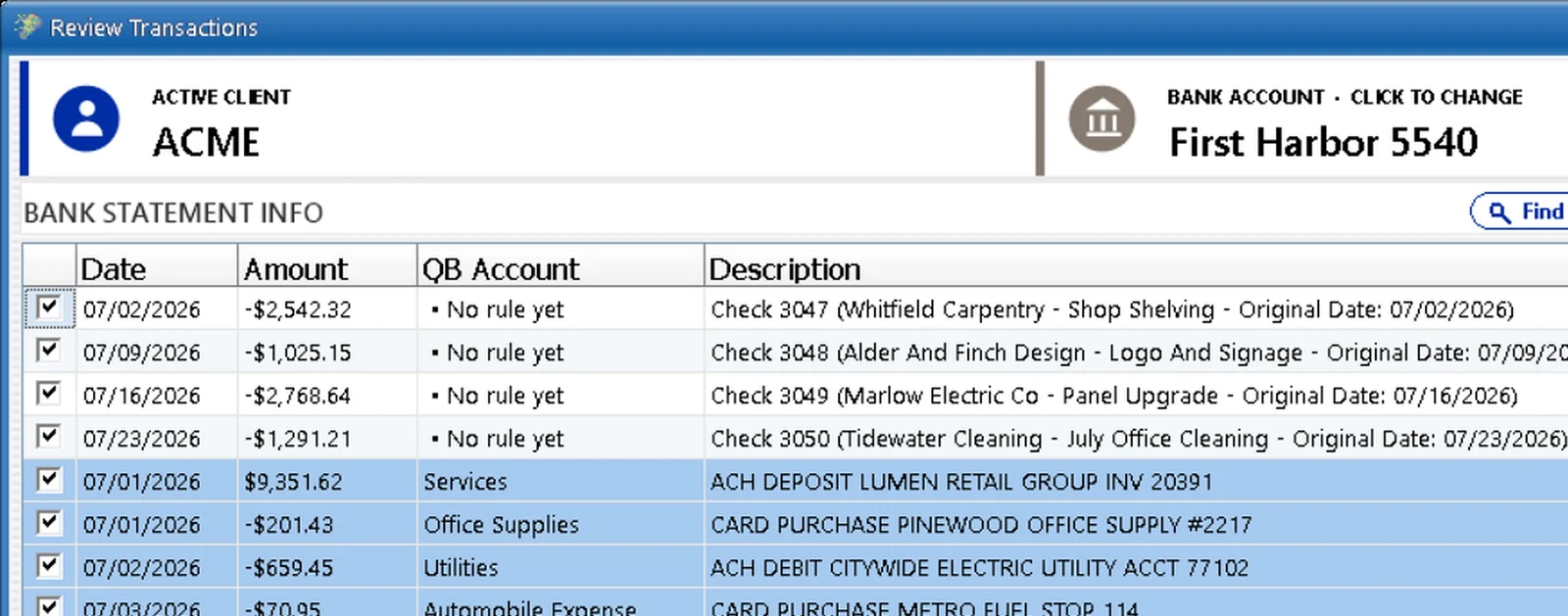

Typing a statement is never just typing.
The person doing it reads each transaction, decides what it is, finds the right account, keys the date, the payee, the memo and the amount, and then does it again for the next line. When the statement is a scan, or the client's checks are handwritten, the reading is half the work. When it is done, someone still has to check that the month ties out against the bank.
None of that is judgment work. The judgment shows up later, in review, classification questions and advising the client. The typing is the part in between, and it is the part that swallows evenings during busy season.
Manual entry and QBuddy, line by line.
| Manual entry | QBuddy | |
|---|---|---|
| Who does the work | A staff member, line by line | QBuddy reads, categorizes and posts; your team reviews |
| Handwritten checks | Deciphered and keyed by hand | Read from the check images, payee and memo included |
| Categorization | Depends on who is typing that day | Your rules on each client's chart of accounts, the same way every time |
| Verification | A manual tie-out at the end, if there is time | BalanceProof checks count, credits, debits and ending balance first |
| Destination | Keyed into QuickBooks directly | QuickBooks Online or any Desktop version, one click |
| Busy season | The bottleneck grows with the pile | The same statement takes the same minutes in April as in July |
Where manual entry still wins.
Very small volumes. If your whole practice types twenty transactions a month, the overhead of changing anything may not pay for itself. Manual entry also needs no setup at all, and for a one-off oddball document a person is still the most flexible reader there is.
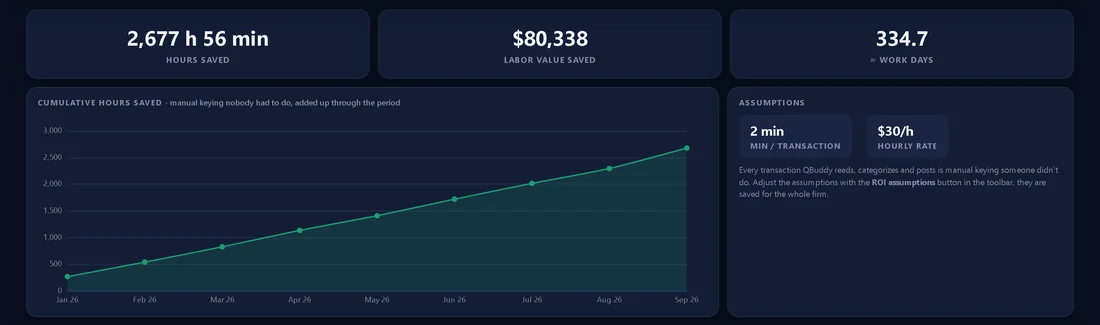
The math changes as volume grows. Put your own numbers into the cost calculator, hours per week and your average rate, and see what the typing costs your firm per year. No industry statistics, just your inputs.
See it on your own statements.
Book a 15-minute demo and bring the messiest statement you have. We will run it live.