Build it in the quiet. Use it in the storm.
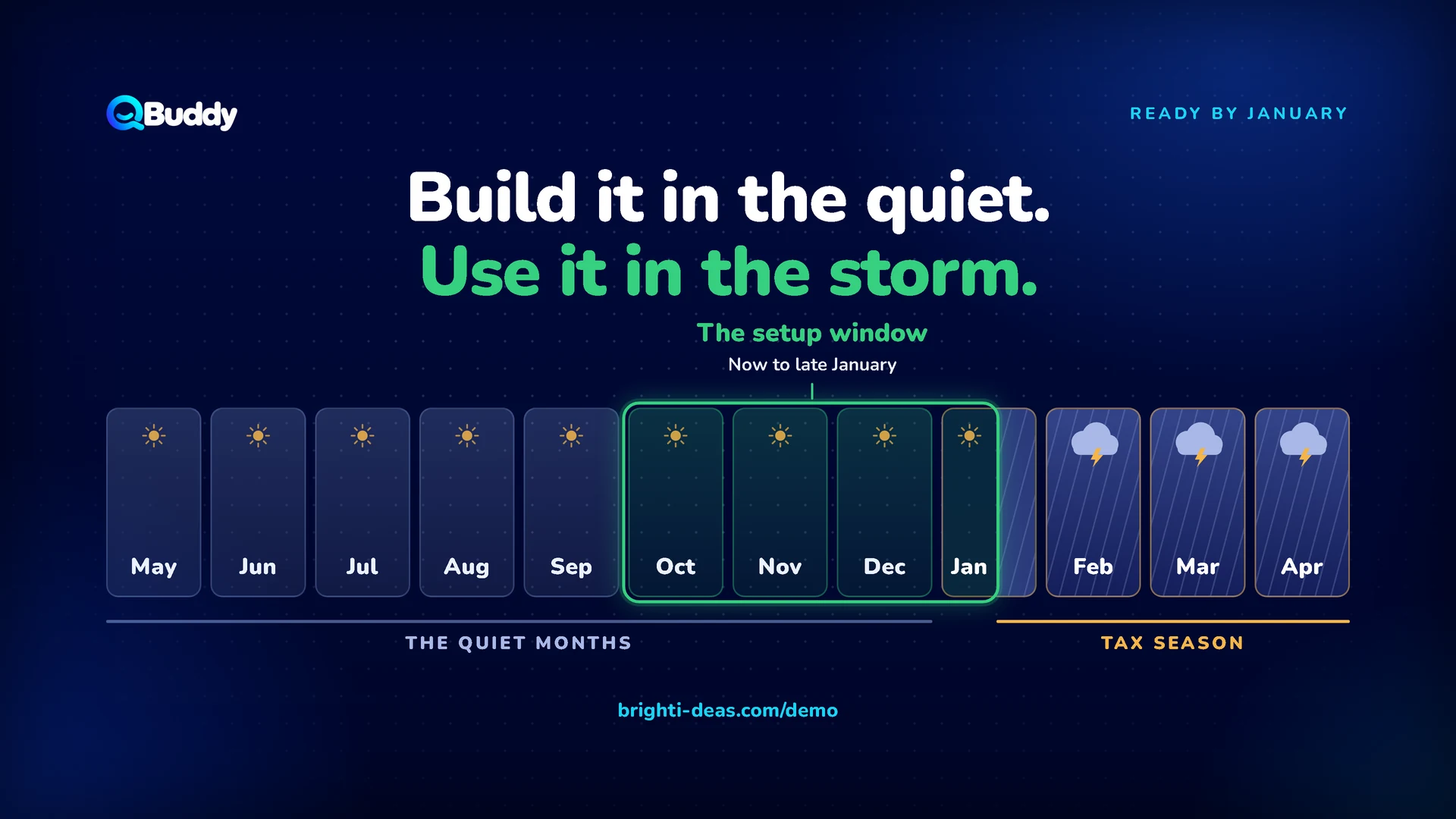
The quiet season is your setup season. Start QBuddy now, while the pile is small, and your team walks into tax season trained, with every client's rules already built. In March you just enjoy the automation.

Low volume is not the reason to wait. It is the reason to start.
“We have low volume right now” is the reason firms give us most often for waiting until next year. That is the point: low volume is when setup is easy and nothing is at stake. Here is why the quiet months count the most.
Rules compound.
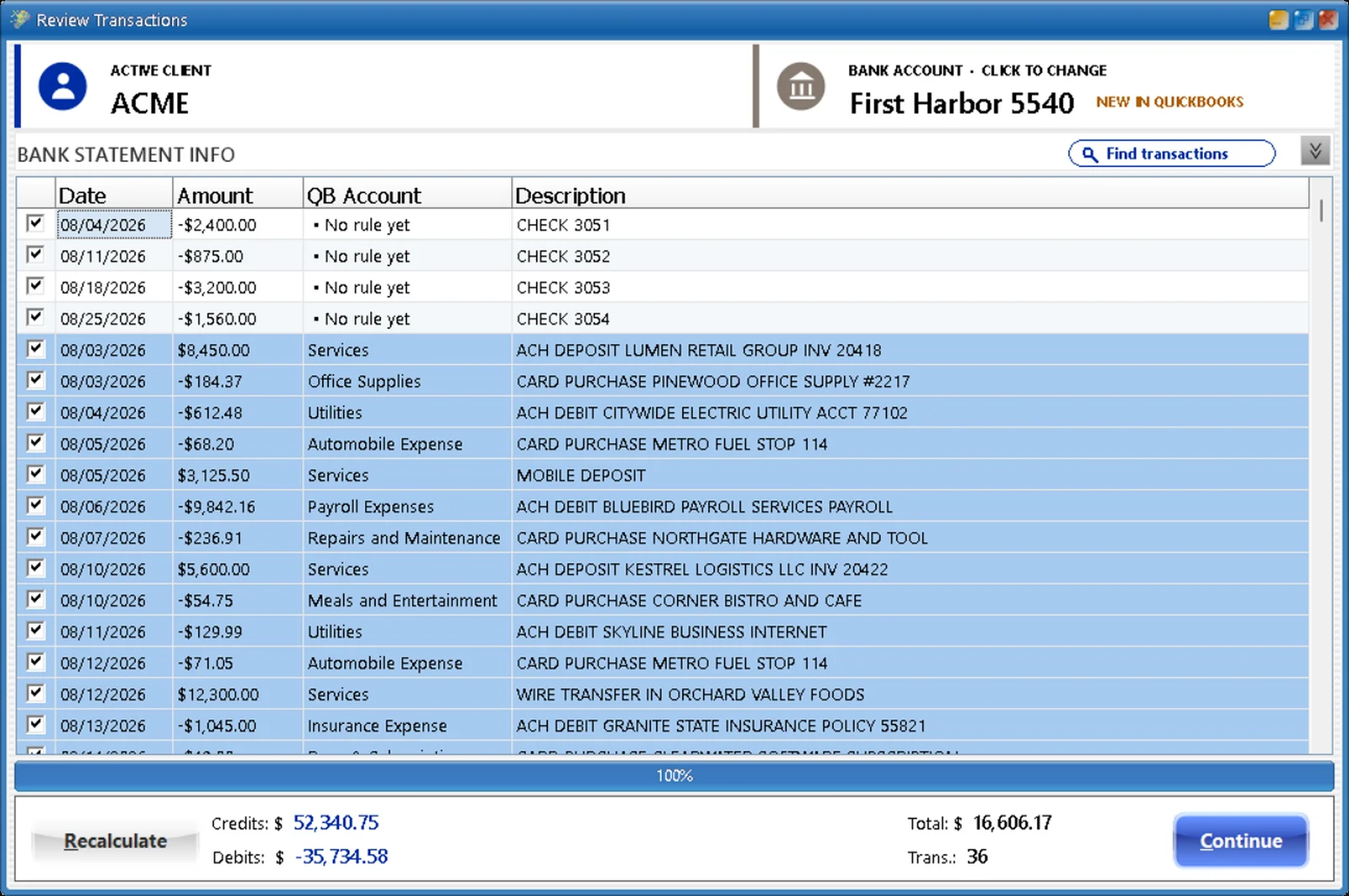
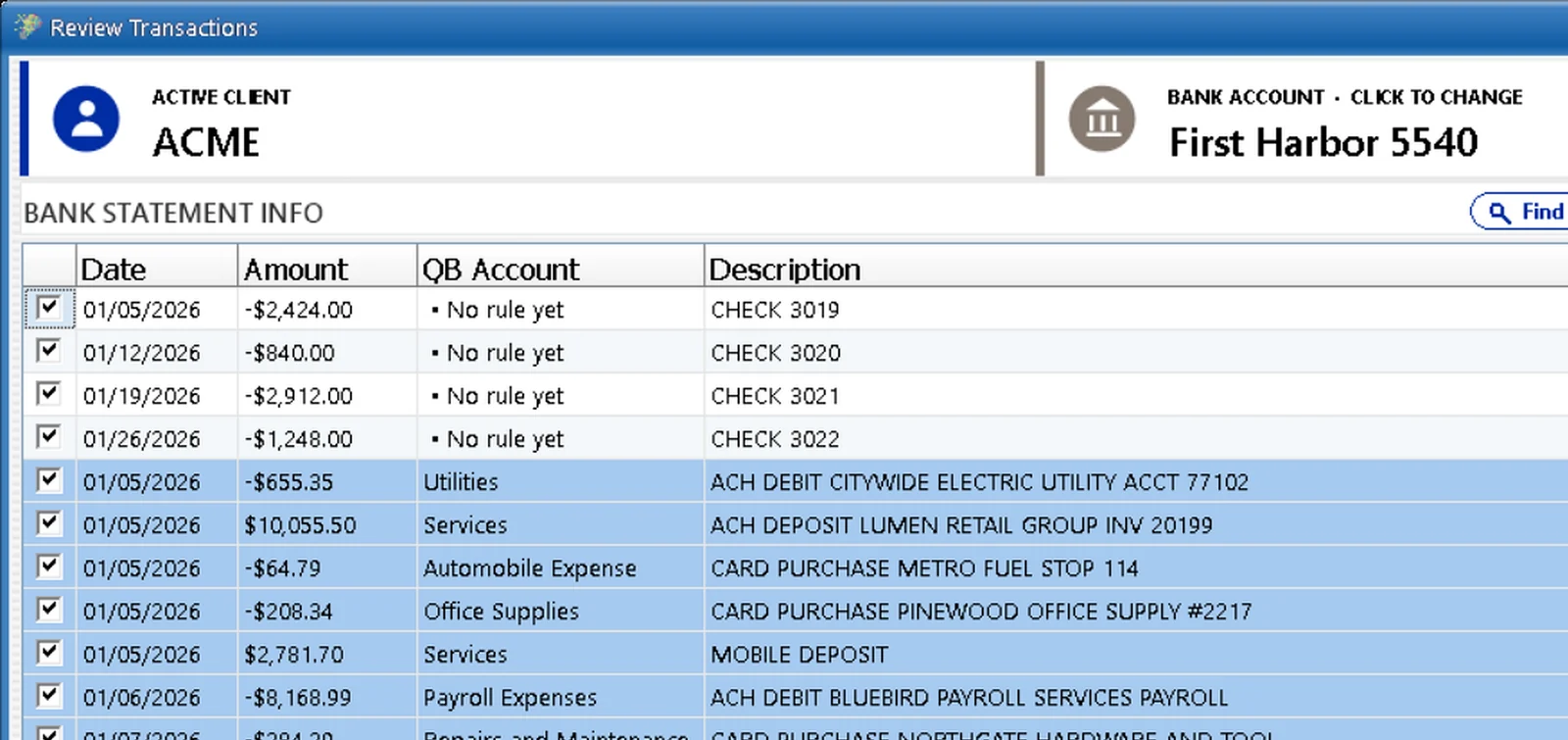
Every statement you process now teaches QBuddy a rule for that client, from that client's own chart of accounts. Month after month more rows arrive already categorized and fewer wait for a person. By tax season, most of each client's month posts itself.
Every rule you teach in October posts itself in March.
Learn when nobody is drowning.
Your team learns in the quiet weeks, 15 minutes a day in QBuddy Academy, not in February with a pile on every desk.
Nobody learns new software in February.
Nobody changes tools in February.
Starting in January is the risky choice: new screens, new habits and the first deadlines, all at once. Starting now is the safe one.
Start while it's slow. Fly when it's busy.
There is work right now.
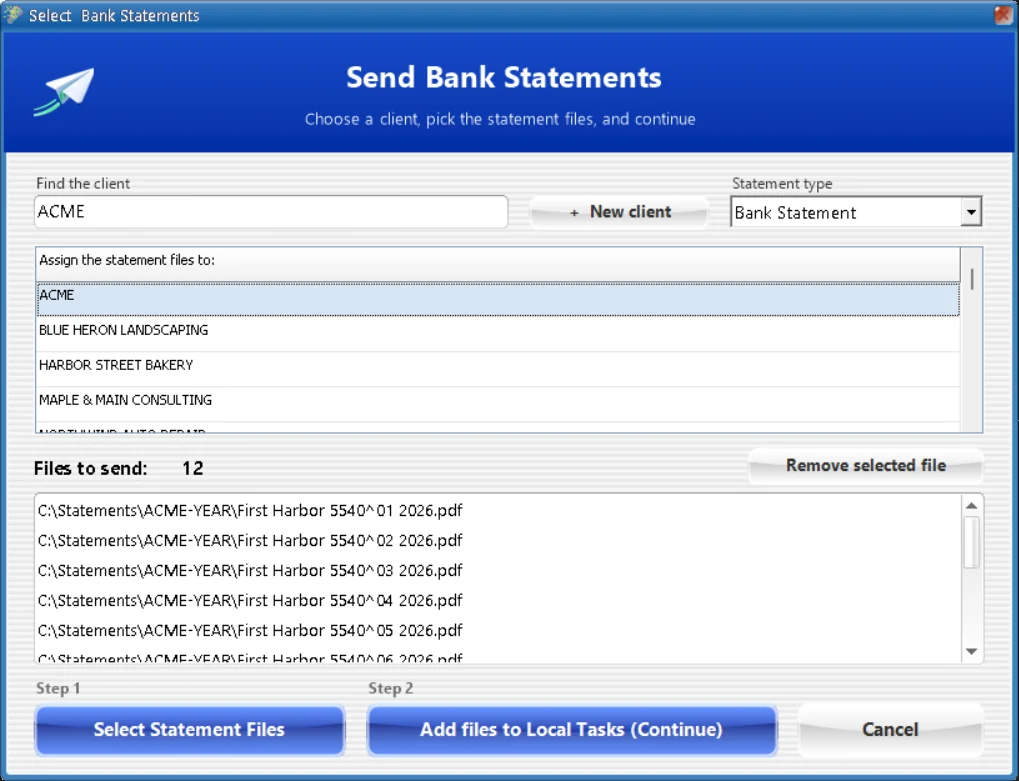
Year end close, catch-up clients with twelve months in one send, and clean books in December that make tax prep faster in February.
The shoebox client fits in one send.
Hire before the rush.
You would never hire someone on April 1 and expect speed on day one. QBuddy is a teammate, not a replacement: bring him on early, and he knows your clients when it counts.
A teammate, onboarded early.
Two Aprils.
Same firm, same clients. One started in October, one waited. The difference is not effort. It is timing.
One job a week. Ready by January.
Twelve weeks, one job each, every one a real QBuddy feature. Start on Monday, October 26, and your whole team is in by the week of January 11.
- Week 1Week of Oct 26Install, connect QuickBooks Online or any Windows Desktop version, and add your first three clients.Setup · Desktop or Online
- Week 2Week of Nov 2Send last month's statements for those clients and watch BalanceProof tie every total to the penny.Reading · BalanceProof
- Week 3Week of Nov 9Teach rules for each client's top ten payees.Rules from the client's chart of accounts
- Week 4Week of Nov 16Bring in ten more clients. Checks come in with payee and memo.Checks
- Week 5Week of Nov 23The team takes the Academy basics, 15 minutes a day.QBuddy Academy · Team Academy
- Week 6Week of Nov 30Catch-up clients: twelve months in one send.A year at once
- Week 7Week of Dec 7Choose where rows without a rule go (Ask My Accountant) and agree on the review routine.Review · the account for rows without a rule
- Week 8Week of Dec 14October and November for every active client.Volume
- Week 9Week of Dec 21Owners: the dashboard and the ROI, with your own numbers.Dashboard · ROI
- Week 10Week of Dec 28Quiet week: look over each client's rules and tidy them.Rules
- Week 11Week of Jan 4Dry run: one person runs a client's whole month, end to end.The whole flow
- Week 12Week of Jan 11Everyone in, December statements as they arrive. Ready.Everything
- ThenLate JanuaryTax season. Your rules do the typing.Read. Verify. Post. Done.
Same firm. Same clients. Two different Aprils.
Same people, same clients, same season. Only the start date changes.
Waited until January
- Installs in January, with the first statements already arriving
- Learns new screens in February, with a pile on every desk
- Every client starts with no rules, so every row waits for a person
- Keeps typing by hand alongside, just in case
- Ends April planning to start properly next year
Started in October
- Set up in the quiet weeks, when a mistake cost nothing
- The team learned 15 minutes a day, before the rush
- Each client's rules built from three months of statements
- Most rows arrive categorized, and people review the rest
- Ends April with time for the planning conversations
Your hours back in tax season.
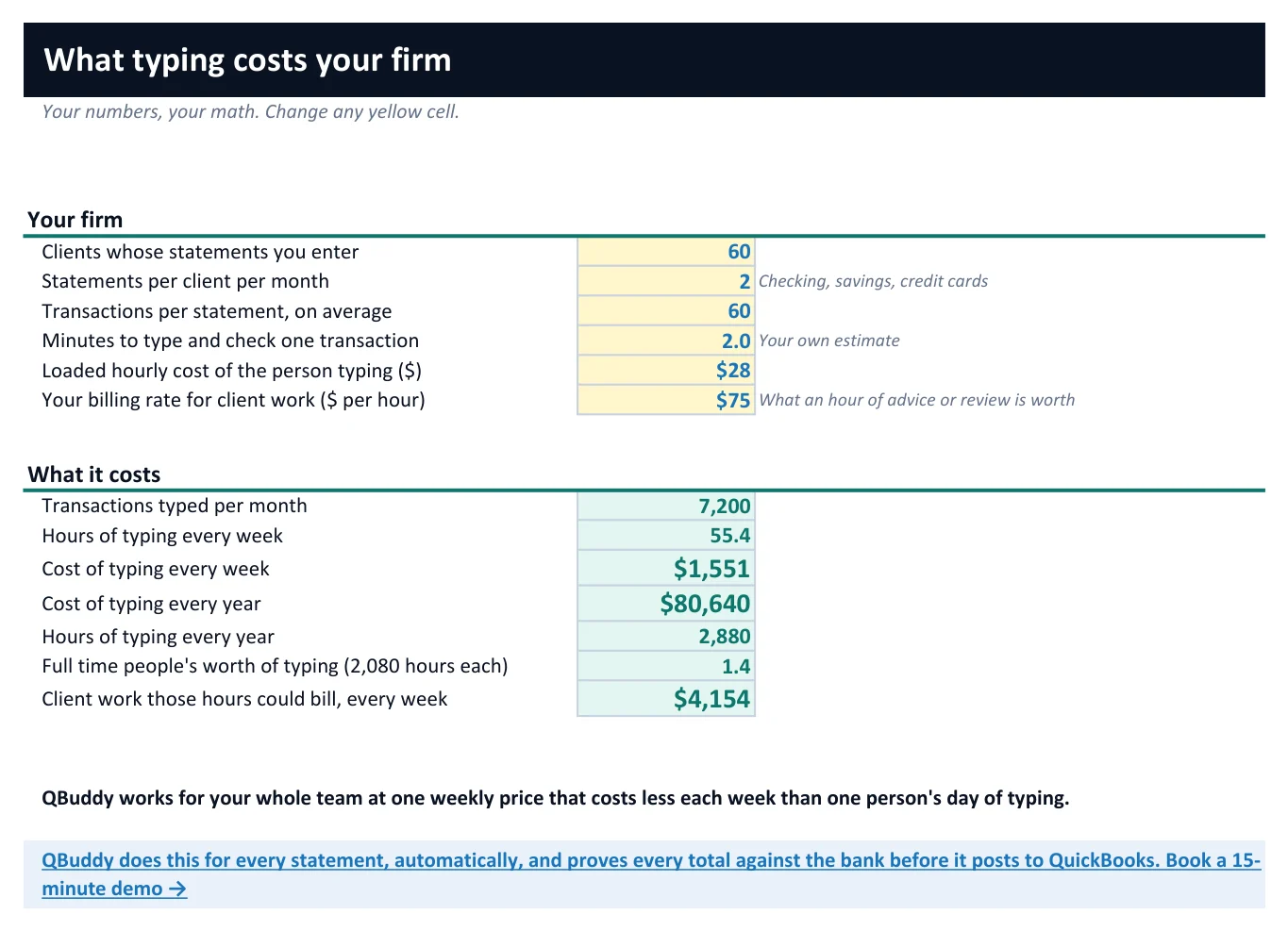
Move the sliders to match your firm in tax season. The math uses only your numbers, and nothing is sent anywhere.
Tax season is counted as about 14 weeks. Hours = statements a month × minutes each ÷ 60, over those 14 weeks (about 3.2 months). The math counts the typing only: your team still reviews what QBuddy prepares.
The season, in a few minutes.
Short videos of the plan and the reasons behind it.
That was the video. The demo is the real thing.
Fifteen minutes, your own statements, your books untouched.
Every rule you teach now posts itself later.
Every statement teaches QBuddy a rule. Watch white rows turn blue, month by month, until most of tax season posts itself.
That was the video. The demo is the real thing.
Fifteen minutes, your own statements, your books untouched.
Two firms. Two Aprils.
One firm started in October, one waited until January. The same clients, two very different Aprils.
That was the video. The demo is the real thing.
Fifteen minutes, your own statements, your books untouched.
Nobody learns new software in February.
Nobody learns new software in February. Why the quiet weeks are when your team should learn QBuddy.
The firm, the clients and the statements shown in these videos are samples made for the demo. The screens are the product's own.
What firms ask before they start.
We have low volume right now. Shouldn't we wait?
Low volume is the point. Setup is easiest when the pile is small: your team learns on real statements with time to ask questions, and every statement processed now teaches QBuddy rules for that client. By tax season, most of each month arrives already categorized.
We'll start in January.
January is when the statements start arriving and nobody has time to learn new screens. Start now and January becomes your dry run, not your first week. Weeks 11 and 12 of the plan are exactly that.
Will my team have time?
The plan asks for one job a week, and the Academy lessons take about 15 minutes a day. That fits the quiet weeks. It does not fit February.
Do we lose anything by starting now?
No. The rules stay with each client, so everything your team teaches QBuddy in October is still there in March, and next year too. Nothing has to be redone when the season starts.
What about our year end work?
It fits now. Year end close and catch-up clients are real work for QBuddy today: a year of statements in one send, every month proved against the bank by BalanceProof. Clean books in December make tax prep faster in February.
Desktop or Online?
Both. QBuddy posts into QuickBooks Online and every Windows Desktop version, chosen per client, with no migration. QuickBooks for Mac is not supported.
Read next
Ready by January.
Book a 15-minute demo now and start week 1 while it is still quiet. Bring the messiest statement you have, and we run it live in our demo company.